Rohingya Refugee Women Grow a Tree Nursery on Bangladesh's Bare Camp Hillsides
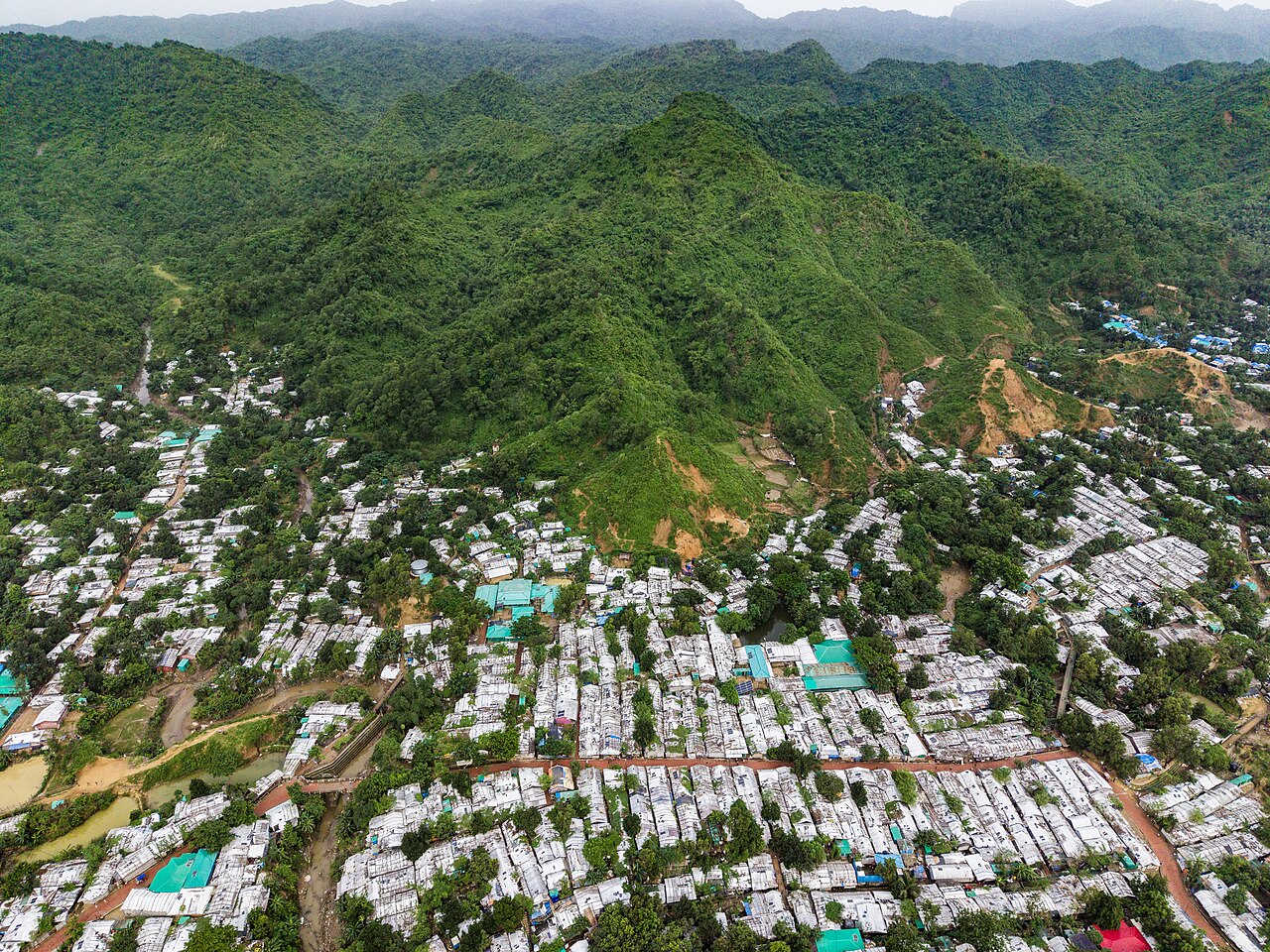
A healthy planet. Near Cox's Bazar, in Bangladesh, the hills that hold the world's largest refugee settlement were once forest. After Rohingya families fled Myanmar in 2017, much of it was cleared for shelters and firewood. Now refugees are bringing the green back. Amina Khatun, who is 58, started a nursery with five other women between the shelters, and sells seedlings and vegetables to neighbors. Another gardener, Mabia Khatun, told Mongabay, "When women grow trees, they grow more than plants; they also grow confidence, knowledge, and hope for their community." Nearly one million tree seedlings have been planted across the camps, despite little space and scarce water. UNHCR, the UN Refugee Agency, supports this work, and welcomes gifts at u n h c r dot org.
Before 2017, the land that is now the Kutupalong refugee camp was tropical evergreen forest and a refuge for endangered Asian elephants, Mongabay reports. The Bangladeshi government set aside roughly 2,500 hectares of protected forest for the settlements, and more than 1,500 hectares were cleared. With nothing to hold the soil, rain ran straight down the sandy slopes and landslides became a seasonal danger. Between July 4 and 19 this year, more than 200 landslides struck the camps and killed at least 15 people, Mongabay reported in September, citing the humanitarian response's own situation update.
Amina Khatun's group of six women works a plot in Camp 1W that is less than a tenth of a hectare. Refugees cannot own land under Bangladeshi law, so the space was set aside by camp authorities and UNHCR's SuLMER project for community gardens and nurseries. The women grow bottle gourd and pumpkin on fences and nets, alongside papaya, banana and jackfruit trees and winter crops such as brinjal and pepper. Some seeds come from the project; others they buy at local markets. Not everyone approves of women doing this kind of public work. "Sometimes people look down on this profession," Amina told Mongabay. "But now, that's fine, we can do something." Across the camps, more than 159,000 refugees now take part in homestead gardening, many drawing on farming skills they brought from Rakhine state in Myanmar.
UNHCR's Sustainable Land Management and Environmental Rehabilitation project, known as SuLMER, began in 2021 in Camps 1W and 2W. According to its 2025 annual report, it restores degraded watersheds and reduces disaster risk for more than 30,750 refugees and 400 host community members through stream cleaning, tree planting, homestead gardening and cash-for-work, and in 2025 it expanded to Camps 3, 4, 5 and 17. The UN Food and Agriculture Organization has also led reforestation with Bangladesh's Forest Department, restoring nearly 258 hectares inside the camps and 2,000 hectares of surrounding forest by 2020, with refugees planting and caring for the trees through cash-for-work.
The gains are fragile. The women say limited space, water shortages and trouble getting good seeds are constant problems. The SuLMER report warns that without clear land ownership, management responsibilities and continued monitoring, restored areas could be degraded again. For Mabia Khatun, the work is also about memory. "Growing a plant in the camp reminds me of my home in Rakhine and gives me hope for a better future," she told Mongabay. "I want to pass on our traditions to the younger generation."
Who is working on this
- UNHCR, the UN Refugee Agency: runs the SuLMER project, which gave the women's nursery its plot and some of its seeds, and has helped plant nearly one million seedlings across the camps.
- Food and Agriculture Organization of the United Nations (FAO): leads reforestation and slope stabilization in and around the camps with Bangladesh's Forest Department, and distributes seeds to refugee gardeners.
- CARE: trains refugees in sack and vertical gardening that makes the most of the tiny spaces between shelters.
Learn more
- Mongabay: Refugee families use agroforestry to restore degraded landscape in Bangladesh camp
- Mongabay: Bangladesh's Rohingya refugee camps become increasingly vulnerable to landslides
- UNHCR via ReliefWeb: Annual Report 2025: Sustainable Land Management and Environmental Rehabilitation (SuLMER)
- FAO: FAO and Rohingya refugees restore forests in and around once barren camps
This story was featured in today's Humanitarian Explorer podcast. Sources: Mongabay, "Refugee families use agroforestry to restore degraded landscape in Bangladesh camp," 27 November 2026; Mongabay, "Bangladesh's Rohingya refugee camps become increasingly vulnerable to landslides," 25 September 2026; UNHCR, "Annual Report 2025: Sustainable Land Management and Environmental Rehabilitation (SuLMER)," 27 July 2026; FAO, "FAO and Rohingya refugees restore forests in and around once barren camps," 22 October 2020.
How you can help
These organizations are helping refugees bring the forest back to the camps' hillsides.